Introduction
The cryptocurrency industry continues to evolve at a rapid pace, and with it comes the growing need for advanced security solutions. Ledger, one of the most well-known hardware wallet providers in the world, has taken a significant step forward by releasing a new firmware update for its popular Nano X wallet. This update is not just a minor adjustment but a comprehensive upgrade that introduces biometric authentication and improved recovery options, setting a new standard for digital asset protection. As the threats facing cryptocurrency investors become more sophisticated, innovations like these are essential to ensure the safety and accessibility of digital wealth.
The Importance Of Hardware Wallets In The Crypto Ecosystem
Hardware wallets have long been regarded as the gold standard in cryptocurrency security. Unlike hot wallets or software wallets connected to the internet, hardware wallets store private keys offline, dramatically reducing the risk of hacking or unauthorized access. Ledger, alongside other providers such as Trezor, has played a crucial role in encouraging safe storage practices among crypto users.
With millions of investors entering the crypto market, the importance of secure storage solutions cannot be overstated. The rise of decentralized finance, NFTs, and Web3 applications has added new layers of complexity to crypto usage. While these innovations have unlocked exciting opportunities, they have also created more attack vectors for hackers. Hardware wallets like Ledger’s Nano X serve as a fortress, shielding users’ private keys from digital threats while ensuring ease of use and compatibility with various applications.
Overview Of The Ledger Nano X Firmware Update
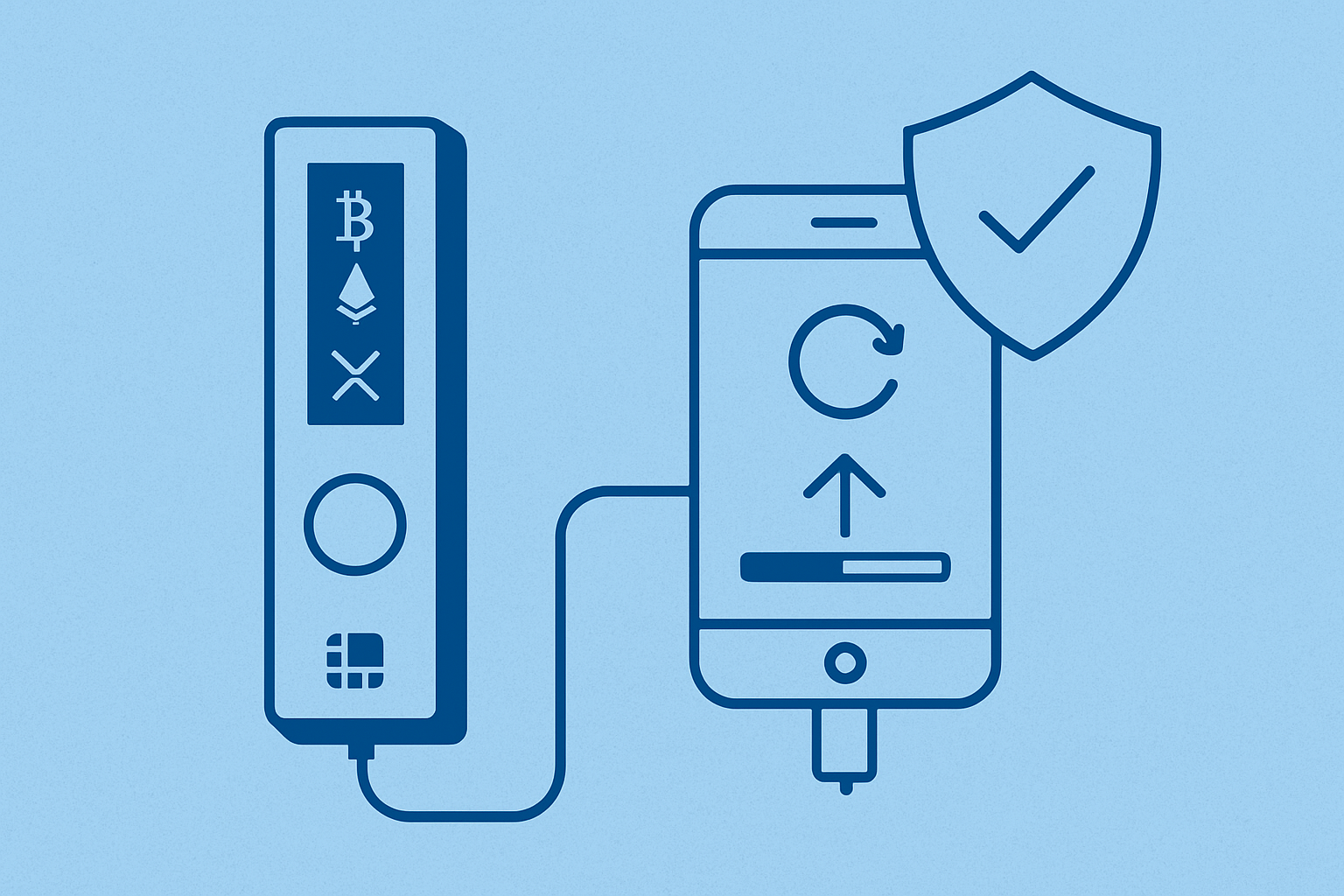
The latest Ledger Nano X firmware update focuses on three key areas: biometric authentication, advanced recovery options, and overall system performance. This rollout demonstrates Ledger’s commitment to innovation and its willingness to anticipate user needs in a rapidly evolving market.
The inclusion of biometric authentication marks a significant milestone. Traditionally, hardware wallets relied on PIN codes or passphrases for access. While effective, these methods could sometimes be vulnerable to phishing attempts, theft, or even user error. By integrating biometric technology such as fingerprint recognition, Ledger ensures that wallets are not only secure but also user-friendly. Biometric systems add an additional layer of protection because they are unique to each individual, making unauthorized access nearly impossible without the physical presence of the wallet owner.
The second major improvement comes in the form of enhanced recovery options. Losing access to a hardware wallet has always been a concern for investors. While recovery phrases provide a way to restore lost wallets, they also come with risks. If recovery phrases are stolen or compromised, the entire wallet is at risk. Ledger’s update introduces more robust recovery mechanisms that strike a balance between accessibility and security. This ensures that users can regain access to their funds without exposing themselves to unnecessary vulnerabilities.
Why Biometric Authentication Matters In Crypto Security?
Biometric authentication has become increasingly common in smartphones, banking applications, and secure facilities, but its integration into hardware wallets marks a turning point in digital asset management. Biometrics such as fingerprints, facial recognition, or even iris scans provide a form of security that cannot be replicated or guessed.
For cryptocurrency investors, this offers peace of mind. A stolen hardware wallet is now significantly less dangerous, as it cannot be accessed without the owner’s unique biometric data. This reduces the risk of theft from physical attacks and adds a barrier against unauthorized users.
Moreover, biometric authentication improves user experience. Instead of remembering long passphrases or entering complex PIN codes, investors can simply authenticate with their fingerprint. This combination of simplicity and strength helps bridge the gap between seasoned crypto enthusiasts and newcomers who may find security protocols intimidating. By making security both effective and intuitive, Ledger is pushing the industry toward greater mainstream adoption.
The Evolution Of Wallet Recovery Systems
One of the most challenging aspects of cryptocurrency management is wallet recovery. Unlike traditional banks, where lost credentials can often be restored with identification, cryptocurrencies operate on the principle of decentralization. This means that responsibility lies entirely with the wallet owner.
Recovery phrases have served as the industry standard, but they come with limitations. If stored incorrectly, they can be stolen. If forgotten, access to digital assets may be lost forever. Ledger’s update addresses these issues by introducing advanced recovery options designed to safeguard both the user’s funds and their peace of mind.
These recovery mechanisms include encrypted backups, secure cloud integrations, and options for multi-factor verification during the recovery process. This ensures that users can regain access even in the event of device loss or damage, without exposing themselves to unnecessary risks. For many investors, this development provides a vital safety net that encourages long-term holding and confidence in the crypto ecosystem.
Enhancing Ledger’s Position In The Market
Ledger has long been a leader in the hardware wallet industry, competing with firms like Trezor and SafePal. However, with this update, Ledger is setting itself apart by addressing both security concerns and user experience simultaneously. While some companies focus solely on airtight security, Ledger recognizes that usability is equally important.
This firmware upgrade strengthens Ledger’s reputation at a time when hardware wallets are becoming increasingly essential. As high-profile hacks and exchange failures continue to plague the industry, investors are seeking more reliable ways to protect their assets. Ledger’s proactive approach reassures users that their funds are secure while providing the convenience necessary for everyday use.
Implications For The Wider Crypto Industry
The release of biometric authentication and enhanced recovery options on the Nano X has implications that go beyond Ledger itself. It signals a broader shift in how cryptocurrency wallets are expected to function in the Web3 era. No longer are wallets simply storage devices. They are evolving into multifunctional platforms that combine security, accessibility, and integration with decentralized ecosystems.
For the industry, this means that user expectations are changing. Investors will likely begin to demand similar features from other wallet providers, sparking competition and accelerating innovation. Security standards will rise, and companies unable to keep up may find themselves left behind. In this sense, Ledger’s update is not just a product enhancement but a catalyst for industry-wide progress.
Potential Challenges And Criticism
Despite its advantages, the firmware update is not without potential challenges. Biometric authentication, while secure, raises questions about privacy and data storage. Users may wonder how their biometric information is stored, whether it is vulnerable to breaches, and if it can be misused. Ledger must be transparent in communicating that biometric data is stored securely on the device itself, never transmitted, and cannot be exploited remotely.
Additionally, some users may be hesitant to rely on recovery systems that involve cloud integrations or encrypted backups. Trust is essential in the crypto world, and Ledger will need to provide detailed assurances that these recovery mechanisms do not compromise decentralization or expose funds to third-party risks. Balancing innovation with the core principles of cryptocurrency will be critical for Ledger’s success moving forward.
The Future Of Crypto Wallet Technology
The Ledger Nano X firmware update provides a glimpse into the future of cryptocurrency wallets. We are moving toward a model where wallets are not only secure but also versatile gateways to the broader digital economy. Features such as staking, decentralized finance integration, cross-chain swaps, and NFT management are becoming standard. With the addition of biometric authentication and advanced recovery systems, wallets are evolving into holistic platforms that empower users to manage their digital assets with confidence.
As cryptocurrencies gain traction globally, the need for secure, accessible, and user-friendly wallets will only increase. Ledger’s update is a strong reminder that innovation in this space is ongoing, and companies that can successfully merge cutting-edge technology with robust security will shape the future of digital finance.
Conclusion
Ledger’s latest firmware update for the Nano X wallet represents a landmark moment in the development of cryptocurrency security. By introducing biometric authentication and advanced recovery systems, Ledger has reinforced its role as a leader in the hardware wallet industry. This update not only enhances individual user security but also sets new benchmarks for the industry as a whole.
The move reflects a deeper understanding of what modern investors need: protection, convenience, and reliability. As the crypto market matures, such innovations will be critical in building trust, encouraging adoption, and safeguarding the decentralized future.


